
Bonvista Financial Services Pvt. Ltd. is an AMFI registered Mutual Fund Distributor holding ARN No.136656
Bonvista Financial Services Pvt. Ltd.
Introduction
It’s a season of results. Quarterly results for Q1 of F.Y.2026-27. This is a perfect time to understand this topic.
Imagine you own a small grocery shop. Last year, you earned Rs. 10 lakhs in sales and made a profit of Rs 1 lakh. This year, your sales increased to Rs. 12 lakhs and your profit doubled to Rs. 2 lakhs. If someone wanted to buy your business, would they pay more today than last year? Probably yes.
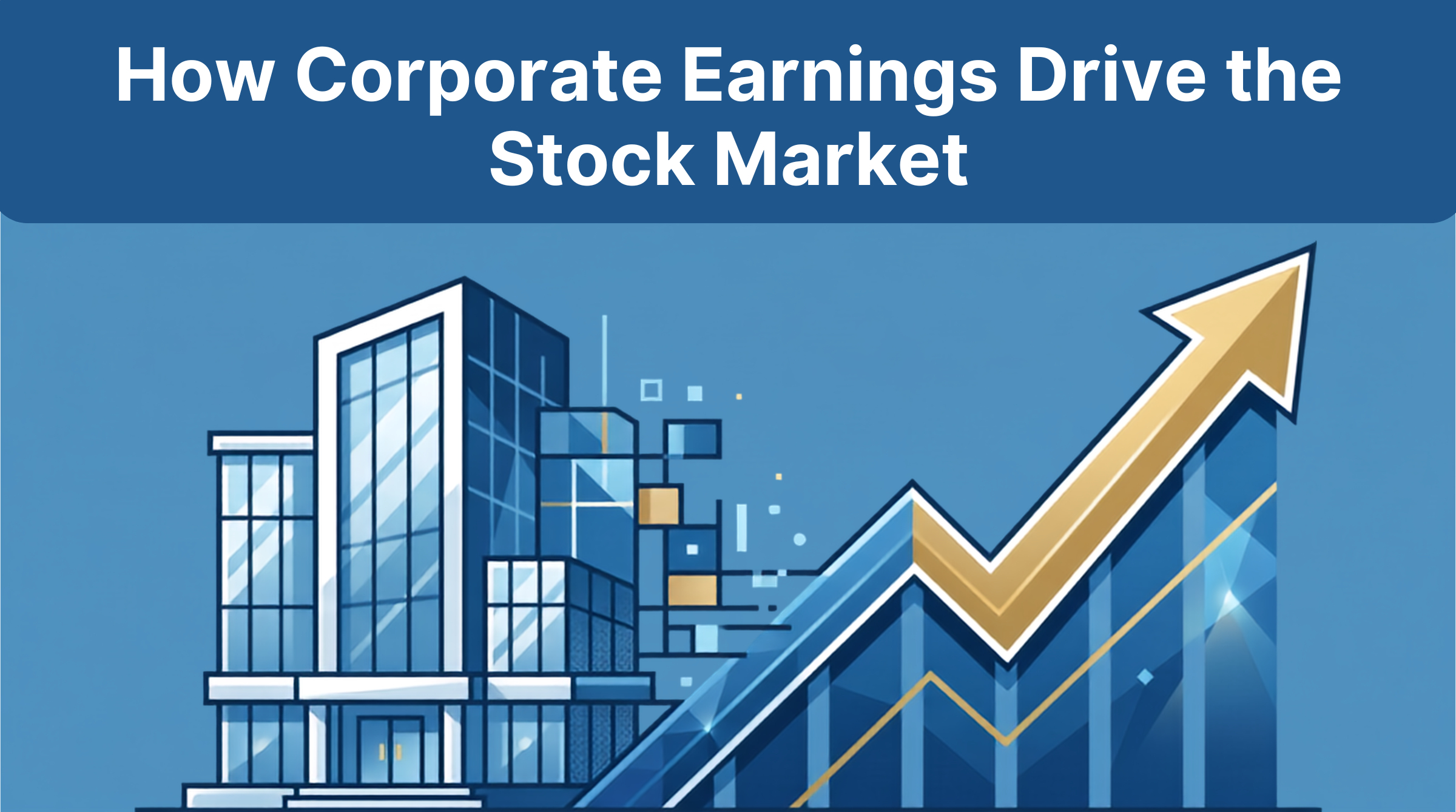
Let’s take another example. Imagine two companies. Both sell similar products. Company A increases its profit every year, while Company B struggles to earn money. If you had to invest in one of them for the next ten years, which would you choose? Most people would choose Company A. This simple example explains one of the most important truths about investing: in the long run, stock prices usually follow corporate earnings.
Daily market movements are influenced by news, results, elections, global events and investor emotions. However, over several years, companies that consistently increase their revenues and profits generally create wealth for shareholders. Understanding corporate earnings helps investors make better decisions and avoid buying stocks based only on rumours or headlines.
What Are Corporate Earnings?
Corporate earnings are the profits a company earns after paying all expenses, salaries, interest and taxes. Revenue tells us how much the company sold, but earnings show how much money it actually kept.
Example:
-
Revenue = 鈧�500 crore
-
Expenses = 鈧�350 crore
-
Net Profit (Earnings) = 鈧�150 crore
Investors prefer businesses that can increase earnings consistently because rising profits often support future expansion, dividends and higher share prices.
Why Do Earnings Matter?
When a company reports strong profit growth, investors become more confident about its future. More people want to buy the stock, increasing demand and often pushing the share price higher. If profits disappoint, investors may sell the stock, causing the price to fall. In the short term, emotions move markets. In the long term, earnings usually decide the direction.
How Earnings Drive the Stock Market
Indices such as the Nifty 50 and Sensex are made up of large listed companies. When many of these companies report healthy earnings, investor confidence improves and the broader market generally performs well. When earnings weaken across several sectors, markets may struggle despite positive news.
Understanding Earnings Per Share (EPS)
EPS is calculated by dividing net profit by the total number of shares. It shows how much profit belongs to each share. A company with rising EPS is generally creating more value for its shareholders. Investors often compare EPS growth over several years rather than one quarter.
Quarterly Results: Why Investors Watch Them
Every three months listed companies announce quarterly results. Experienced investors don't look only at profit. They also review revenue growth, operating margins, debt, cash flow and management guidance. Sometimes a company reports record profits, but its stock falls because investors expected even better performance. It is always expected versus actual performance.
Sectoral Examples:
-
Banks benefit when credit growth is strong and bad loans remain under control.
-
IT companies perform well when global technology spending increases.
-
Automobile companies benefit from higher vehicle demand.
-
FMCG companies improve profitability when raw material costs decline and consumption remains healthy.
These examples show why understanding the business environment is important.
Join Paise ki Paathshaala!
Want to master the concepts of financial literacy and smart investing? Join our growing educational community of 280+ investors on WhatsApp!
Why Good Results Don't Always Mean Higher Stock Prices
Markets are forward-looking. If a stock is already expensive or investors expect exceptional growth, even good results may disappoint the market. This is why investors should compare earnings with expectations rather than looking at profits in isolation.
Common Mistakes Investors Make
-
Buying stocks without reading financial results.
-
Focusing only on revenue and ignoring profitability.
-
Reacting emotionally to one weak quarter.
-
Following social media tips instead of business fundamentals.
-
Ignoring debt and cash flow.
Dispelling Myths About Financial Results
| Myth | Reality |
|---|---|
| Higher revenue always means a better company. | Profit matters more than revenue alone. |
| Good quarterly results always increase share prices. | Expectations also matter. |
| Cheap stocks are better investments. | Business quality matters more than price. |
| One bad quarter means the company is weak. | Long-term trends are more important. |
Essential Investor Checklist
| What to Check | Why It Matters |
|---|---|
| Revenue Growth | Shows business expansion |
| Net Profit Growth | Reflects improving profitability |
| EPS | Measures profit per share |
| Operating Margin | Shows efficiency |
| Debt | High debt increases risk |
| Cash Flow | Confirms quality of earnings |
| Management Guidance | Indicates future outlook |
Key Takeaways
-
Earnings are the biggest long-term driver of stock prices.
-
Strong businesses usually report consistent profit growth.
-
Quarterly results provide valuable insights into company performance.
-
Good earnings should be analysed along with valuations and future guidance.
-
Long-term investors should focus on business quality rather than daily market noise.
Conclusion
The stock market may appear unpredictable from day to day, but its long-term direction is closely linked to corporate earnings. Companies that continue to grow sales, improve profits and allocate capital wisely have historically rewarded patient investors. Instead of chasing rumours or trying to predict every market move, build the habit of reading company results and understanding how businesses earn money. Knowledge of corporate earnings can help you become a more confident and disciplined investor, regardless of market conditions.
Connect With Our Wealth Experts
Ready to transition from reactive saving to strategic wealth creation? Let our certified team assist you with expert Portfolio Management Services (PMS), high-alpha AIF advisory, and comprehensive retirement planning.
-
Book a Consultation: Book a meeting with us for ultimate wealth creation
-
Call Us: +91 8390040100
-
Chat With Us: +91 8390040200
-
Visit Us: 506, Business Galaxy Building, Opp. Gokul Hotel, Beside Box Cricket, Kute Marg, Tidke Colony, Nashik, Maharashtra 422002
Follow for daily updates: WhatsApp | LinkedIn | YouTube | Instagram | Facebook | X | Pinterest
Disclaimer: This article is for educational and informational purposes only and does not constitute financial or investment advice. Investors should consult with their certified financial planner or wealth manager before making any investment decisions. Mutual fund and gold investments are subject to market risks.

Mr. Unmesh Deshmukh
Founder & Director, Bonvista Financial Services | AMFI ARN: 136656
With over 24 years of elite experience in the financial services industry, Unmesh is a seasoned investment expert. He acts with a strict fiduciary mindset, leveraging data-backed strategies to help individuals and families create sustainable, generational wealth.
Connect on LinkedIn



Disclaimer: Mutual Fund investments are subject to market risks, read all scheme related documents carefully.
Bonvista Financial Services Pvt. Ltd. is an AMFI-Registered Mutual Fund Distributor (ARN: 136656). Any investment guidance provided is strictly incidental to our primary mutual fund distribution activity.