

Bonvista Financial Services Pvt. Ltd. is an AMFI registered Mutual Fund Distributor holding ARN No.136656
Bonvista Financial Services Pvt. Ltd.
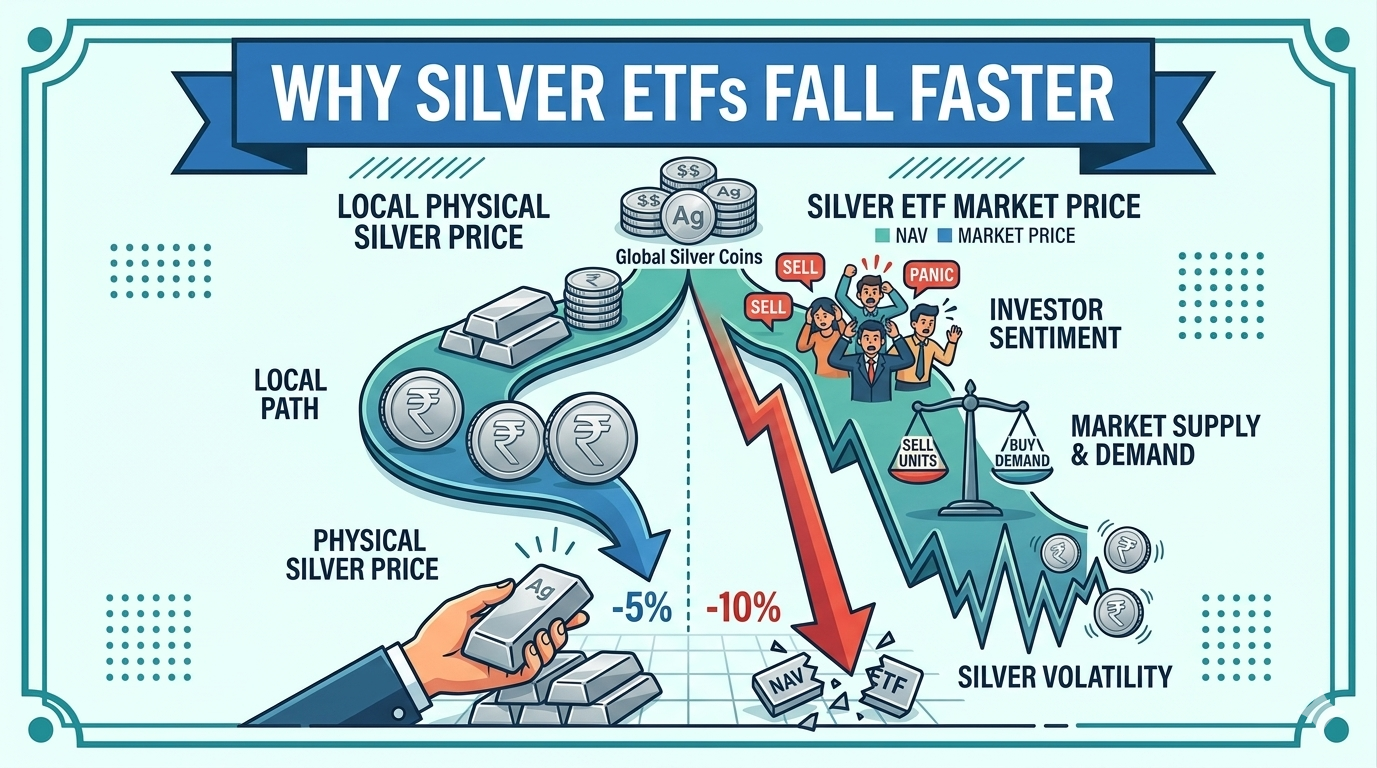
Many investors are surprised when they notice that Silver ETFs decline more sharply than physical silver prices. For example, an ETF investment may fall by 10% while the local market price of silver drops only 5%. This difference is common and does not mean that the ETF is faulty or misleading.
To understand this properly, it is important to know that gold and silver do not have one universal price. Different markets determine different prices, and each market behaves in its own way.
1. International Gold and Silver Prices
Global prices are quoted in international markets such as London and New York. These prices are usually shown in US dollars per ounce and are influenced by factors such as interest rates, global economic conditions, central bank policies, geopolitical developments, and movements in the US dollar.
2. Silver ETF vs Physical Silver Price | Gold vs Gold ETF Price
The prices charged by bullion dealers and jewellers in India are different from global prices because they include multiple additional components such as import duty, GST, currency conversion, transportation costs, and domestic demand and supply conditions. Jewellery prices may also include making charges. Gold and Silver ETFs are traded on stock exchanges just like shares. Although these ETFs are backed by physical metal, their trading prices are affected by stock market activity and investor behaviour.
Want to stay ahead of the market? Join 300+ investors in our 'Paise ki Paathshala' WhatsApp community for weekly simplified insights on tax-saving, wealth-building, trending news, and mutual fund tips.
Join the Community
Every ETF has two important values:
- NAV (Net Asset Value): This represents the actual value of the metal held by the fund after accounting for expenses.
- Market Price: This is the price at which ETF units are bought and sold on the stock exchange.
The market price can temporarily move above or below NAV depending on trading demand.
Three Reasons Why Silver ETFs Fall Faster Than Physical Silver
1. Investor Sentiment Has a Bigger Impact on ETFs
Physical gold and silver are largely traded by jewellers, banks, and institutional participants, so prices generally move gradually. In contrast, ETF trading is heavily influenced by retail investors who react quickly to news, market fear, or profit booking. As a result, ETF prices may decline rapidly during periods of panic selling.
2. Demand and Supply in the Market
ETF prices depend on active buyers and sellers in the stock market. If a large number of investors try to sell ETF units at the same time, selling pressure increases and prices may fall below NAV. This does not necessarily mean that physical silver prices have collapsed.
3. Silver ETFs Are More Volatile Than Gold ETFs
Silver is generally considered more volatile and less liquid compared to gold. Because of this, silver ETFs often witness sharper price swings whenever market sentiment changes. The difference between ETF prices and physical silver prices may therefore become wider during uncertain periods.
Confused about which metal assets fit your current portfolio? Don't leave your wealth to chance. Talk to our experts at Bonvista to align your investments with your long-term goals.
Book a Free Portfolio Review
Currency Movement Also Matters
Gold and silver are globally priced in US dollars. If the Indian Rupee strengthens against the dollar, domestic bullion prices may decline even if international prices remain stable. ETF prices usually react immediately to such currency movements, whereas physical market prices may adjust more gradually.
Should Indian Investors Avoid Silver ETFs Due to Volatility?
Gold and Silver ETFs can still be useful investment options for long-term diversification. They offer convenience, transparency, and remove concerns related to storage and purity. However, investors should understand that short-term price movements may differ from local bullion prices.
ETFs may not be suitable for investors who panic during volatility or expect ETF prices to exactly match jewellery or bullion shop rates every day. Like any market-linked investment, ETF prices can temporarily fluctuate because of investor behaviour and market liquidity.
While short-term price gaps are normal, the secret to success in Silver ETFs is long-term consistency. Want to see how a disciplined monthly investment can help you build wealth despite market dips? Use our SIP Calculator to plan your target
Calculate Your Future Wealth
Conclusion:
Gold and Silver ETFs provide an efficient way to participate in precious metal investments without physically holding the metal. However, ETF prices are influenced not only by bullion prices but also by stock market demand, liquidity, currency movements, taxes, and investor sentiment.
Small short-term gaps between ETF prices and physical market prices are therefore normal.
Investors who understand these mechanics are better prepared to make informed decisions and avoid unnecessary panic during market fluctuations.
Follow for daily updates: WhatsApp | LinkedIn | YouTube | Instagram | Facebook | X | Pinterest
Disclaimer: This article is for educational and informational purposes only and does not constitute financial or investment advice. Investors should consult with their certified financial planner or wealth manager before making any investment decisions. Mutual fund and gold investments are subject to market risks.

Mr. Unmesh Deshmukh
Founder & Director, Bonvista Financial Services | AMFI ARN: 136656
With over 24 years of elite experience in the financial services industry, Unmesh is a seasoned investment expert. He acts with a strict fiduciary mindset, leveraging data-backed strategies to help individuals and families create sustainable, generational wealth.
Connect on LinkedIn




Disclaimer: Mutual Fund investments are subject to market risks, read all scheme related documents carefully.
Bonvista Financial Services Pvt. Ltd. is an AMFI-Registered Mutual Fund Distributor (ARN: 136656).