
Bonvista Financial Services Pvt. Ltd. is an AMFI registered Mutual Fund Distributor holding ARN No.136656
Bonvista Financial Services Pvt. Ltd.
Interest rates may sound like a topic meant for economists and central bankers. But they can have a direct impact on an ordinary Indian investor. Whether you are running a monthly SIP in mutual funds from Pune, managing equity portfolios in Mumbai, or planning long-term family wealth in Nashik, international monetary policy decisions dictate capital flows across the globe.
In September 2026, two of the world's most important central banks made significant moves.
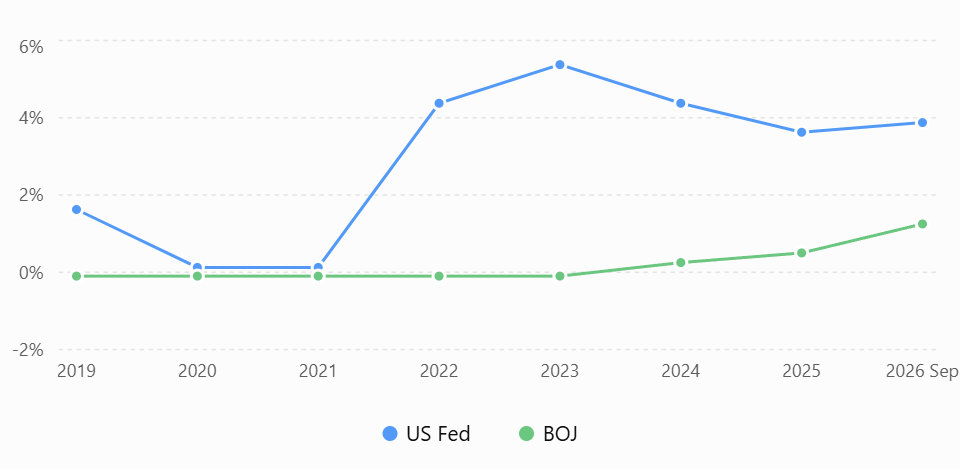
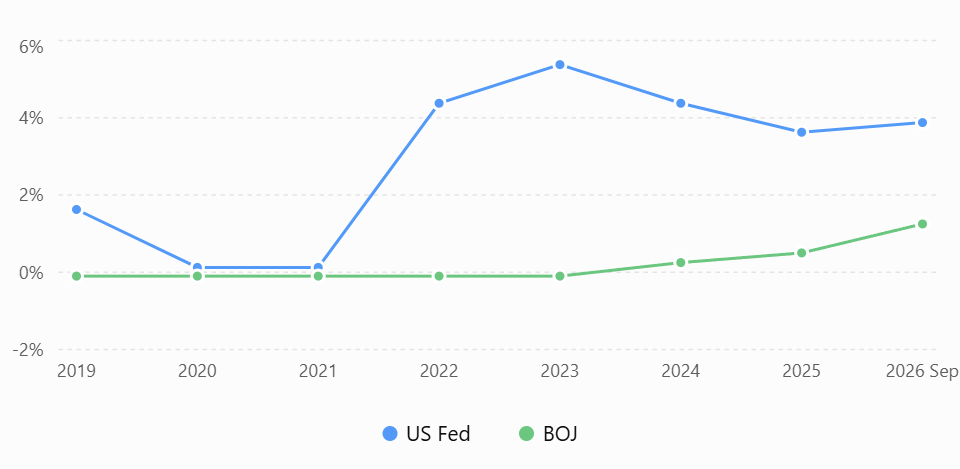
The US Federal Reserve raised its policy rate by 0.25% to 3.75%-4.00% on 16th September. In the last 3 years, it was the Fed's first rate increase. Two days later, the Bank of Japan raised its policy rate from 1.00% to 1.25%, taking it to its highest level in 31 years.
Let’s look at the chart of US Fed and Bank of Japan Policy Rates from 2019-2026:
Year-end policy rates for 2019-2025 and the latest rate as of September 2026. US Fed values use the midpoint of the target range.
At first glance, an Indian investor may wonder:
“Why should I care about interest rates in America and Japan?”
The answer is simple. Because global money moves across countries looking for returns and safety. Institutional capital from foreign portfolio investors (FPIs) is highly sensitive to cross-border yield differentials and currency stability.
When major central banks change interest rates, those money flows can change, and India can be affected.
Let's understand the impact in simple words.
Learn Financial Concepts Without the Noise
Want to simplify complex market metrics, mutual fund concepts, and goal-based strategies?
Join our investor community on WhatsApp: Join Paise Ki Paathshaala for practical, educational insights to support your wealth journey.
What Do Higher Interest Rates Mean?
When a central bank raises interest rates, borrowing generally becomes more expensive and financial conditions can become tighter. Central banks use these monetary tightening tools to regulate excess liquidity in their domestic economies.
The objective is usually to control inflation and prevent excessive demand.
The US Federal Reserve said inflation remained elevated when it raised rates in September and stated that the move was intended to support a return toward its 2% inflation goal.
The Bank of Japan also raised rates as it continued moving away from decades of ultra-low interest rates, with inflation approaching its 2% target.
But interest rates do not stop at national borders. They influence global investors.
1. Why Does the US Fed Matter to Indian Investors?
The United States has the world's largest financial market. US Treasury bonds are considered an important, relatively low-risk asset by global investors.
Suppose an investor can earn a higher return from US bonds with relatively low risk; they do not take additional risk by investing money in emerging markets.
This can influence the flow of money into countries such as India.
If global investors reduce their allocation to Indian equities, FII/FPI selling can put pressure on Indian stocks. However, this does not mean every Fed rate hike automatically causes an Indian market fall. Emerging markets like India, backed by resilient corporate balance sheets, frequently absorb foreign outflows through domestic institutional inflows.
Markets also depend on what investors had already expected.
2. The Dollar Can Become More Important
The popularity of assets denominated in dollars is influenced by US interest rates. If US rates rise and Treasury yields become more attractive, the dollar can receive support. For India, the exchange rate matters.
If the dollar strengthens, the Indian Rupee Weakens, imported goods become more expensive, and Inflation pressure can increase.
This is particularly important for India because the country imports commodities such as crude oil. A widening current account deficit can pose short-term hurdles for Indian financial markets.
A weaker rupee can therefore create additional challenges for the Indian economy.
3. Bank of Japan and the Yen Carry Trade Unwind
The Bank of Japan's decision is particularly interesting because Japan has followed an extremely loose monetary policy for decades. Japan's policy rate had remained very low compared with other major economies.
That made the Japanese yen an important funding currency for global investors.
In simple terms, investors could borrow cheaply in yen and invest in assets offering higher potential returns elsewhere.
This type of strategy is often called a yen carry trade.
Now, if the Japanese interest rates continue to rise, borrowing becomes expensive. If borrowing in yen becomes more expensive, some investors may decide to reduce overseas investments and return money to Japan.
That can affect global financial markets. Sudden liquidity adjustments in Tokyo can create ripples across stock exchanges worldwide, including the BSE and NSE in India.
4. Does This Mean FIIs Will Sell Indian Stocks?
An increase in interest rates does not necessarily mean that FIIs will sell Indian Stocks. The actual impact depends on several factors.
Foreign investors compare:
-
Indian valuations
-
US bond yields
-
Japanese rates
-
Global growth
-
Currency movements
-
Corporate earnings
-
Geopolitical risks
-
Opportunities in other countries
India can continue attracting foreign capital if investors believe Indian equities offer attractive long-term opportunities. Supported by strong domestic mutual fund SIP inflows from retail investors across tier 1 and tier 2 cities, Indian markets possess deep internal absorption power. So, investors should look at actual FII flows, rather than assuming what FIIs will do.
5. What About Indian Banking Sector?
Indian banks need to be looked at differently. Global rate changes do not automatically translate into the same rate changes in India.
The Reserve Bank of India determines India's monetary policy based on Indian economic conditions. The RBI Monetary Policy Committee primarily focuses on domestic consumer price index (CPI) inflation and sustainable credit growth.
However, global rates can still influence:
-
Foreign capital flows
-
Bond yields
-
Currency movements
-
Funding conditions
-
Investor sentiment
For Indian banks, domestic factors such as credit growth, asset quality, deposit growth, margins and RBI policy remain extremely important. Indian commercial banks have maintained multi-year low non-performing assets (NPAs) and healthy capital adequacy ratios.
Therefore, investors should not conclude that a US or Japanese rate hike automatically means Indian banks will perform badly.
Impact on Gold
Gold is another asset Indian investors should watch. Gold does not generate interest income. Therefore, when interest rates and bond yields rise significantly, gold can sometimes face competition from interest-bearing assets.
If global investors become worried about Inflation, Geopolitical tensions, Currency weakness, and financial-market uncertainty, then gold can receive demand as a potential store of value and portfolio diversifier. For Indian households, gold continues to serve as an essential hedge against currency depreciation and macro market swings.
Relationship of Interest Rates with Indian Debt Funds and Bonds
Higher global rates can influence bond markets through global yields and currency movements.
But Indian debt investors should primarily focus on RBI policy, Indian inflation, Government borrowing, Indian bond yields, Credit conditions, and the duration of the fund.
For example, if Indian bond yields rise, existing long-duration bonds can experience price pressure. This is why debt funds are not completely risk-free.
The interest-rate environment matters. Investors planning fixed-income allocations should always match their investment horizon with the modified duration of the debt scheme.
Why Should SIP Investors Care?
If you are investing through a monthly SIP, you may wonder whether you should stop SIPs. A single global policy decision should not automatically determine a long-term investment decision.
If your investment horizon is 10-15 years, markets will go through many cycles of rate hikes, rate cuts, economic expansions, corrections, and recoveries. In this case, your asset allocation and investments according to financial goals and risk appetite matter.
A long-term investor should avoid turning every central-bank announcement into a buy-or-sell decision. Systematic investment plans benefit from rupee-cost averaging, specifically when macro volatility causes temporary market dips.
What Should Indian Retail Investors Look at This Moment?
Instead of focusing only on the Fed and BOJ headlines, watch the chain of events.
-
US Interest Rates: Expectation of interest rates remaining high for longer.
-
US Treasury Yields: Higher yields can influence global asset allocation.
-
Dollar Index: A stronger dollar can create pressure on emerging-market currencies.
-
USD/INR: A weaker rupee can affect imported inflation and certain businesses.
-
FII Flows: Movement of foreign investors w.r.t. buying or selling Indian equities.
-
Indian Corporate Earnings: Profit growth of Indian Companies.
-
RBI Policy: Response of RBI to domestic inflation and growth.
-
Crude Oil: Oil prices can influence India's inflation, trade balance and currency.
These indicators together provide a much better picture than any single interest-rate decision.
Final Takeaway for Retail Investors
The US and Japan may be thousands of kilometres away from India, but their central-bank decisions can influence Indian investments.
The US Fed matters because of the dollar, US Treasury yields, and global capital flows.
The Bank of Japan matters because Japan has historically been an important source of cheap global funding, and changes in Japanese rates can affect the yen and global carry trades.
For Indian investors, the impact can reach Equities, Bonds, Gold, the rupee, and FII flows.
But there is no need to react to every headline. Instead, keep an eye on the bigger picture.
Factors such as Interest rates, inflation, currency, FII flows, corporate earnings, and valuations together matter far more than one central-bank announcement.
Don't invest based on whether the Fed or BOJ is raising or cutting rates. Understand how those decisions can affect global money flows, the rupee, Indian valuations, and corporate earnings, and then consider whether your portfolio is positioned for your own investment horizon and risk tolerance.
Structured goal-based investing and professional asset allocation remain the most reliable strategy to build long-term wealth without getting distracted by short-term global market noise. Consulting an AMFI-registered Mutual Fund Distributor can help ensure your mutual fund and equity investments remain aligned with your family milestones regardless of global interest rate cycles.
Connect With Our Wealth Experts
Ready to transition from reactive saving to strategic wealth creation? Let our certified team assist you with expert Portfolio Management Services (PMS), high-alpha AIF advisory, and comprehensive retirement planning.
-
Book a Consultation: Book a meeting with us for ultimate wealth creation
-
Call Us: +91 8390040100
-
Chat With Us: +91 8390040200
-
Visit Us: 506, Business Galaxy Building, Opp. Gokul Hotel, Beside Box Cricket, Kute Marg, Tidke Colony, Nashik, Maharashtra 422002
Follow for daily updates: WhatsApp | LinkedIn | YouTube | Instagram | Facebook | X | Pinterest
Disclaimer: This article is for educational and informational purposes only and does not constitute financial or investment advice. Investors should consult with their certified financial planner or wealth manager before making any investment decisions. Mutual fund and gold investments are subject to market risks.

Mr. Unmesh Deshmukh
Founder & Director, Bonvista Financial Services | AMFI ARN: 136656
With over 24 years of elite experience in the financial services industry, Unmesh is a seasoned investment expert. He acts with a strict fiduciary mindset, leveraging data-backed strategies to help individuals and families create sustainable, generational wealth.
Connect on LinkedIn