
Bonvista Financial Services Pvt. Ltd. is an AMFI registered Mutual Fund Distributor holding ARN No.136656
Bonvista Financial Services Pvt. Ltd.
Imagine waking up in Mumbai during the monsoon and asking a financial market question instead of checking your weather app:
Will there be more or less rainfall in Mumbai this month than anticipated?
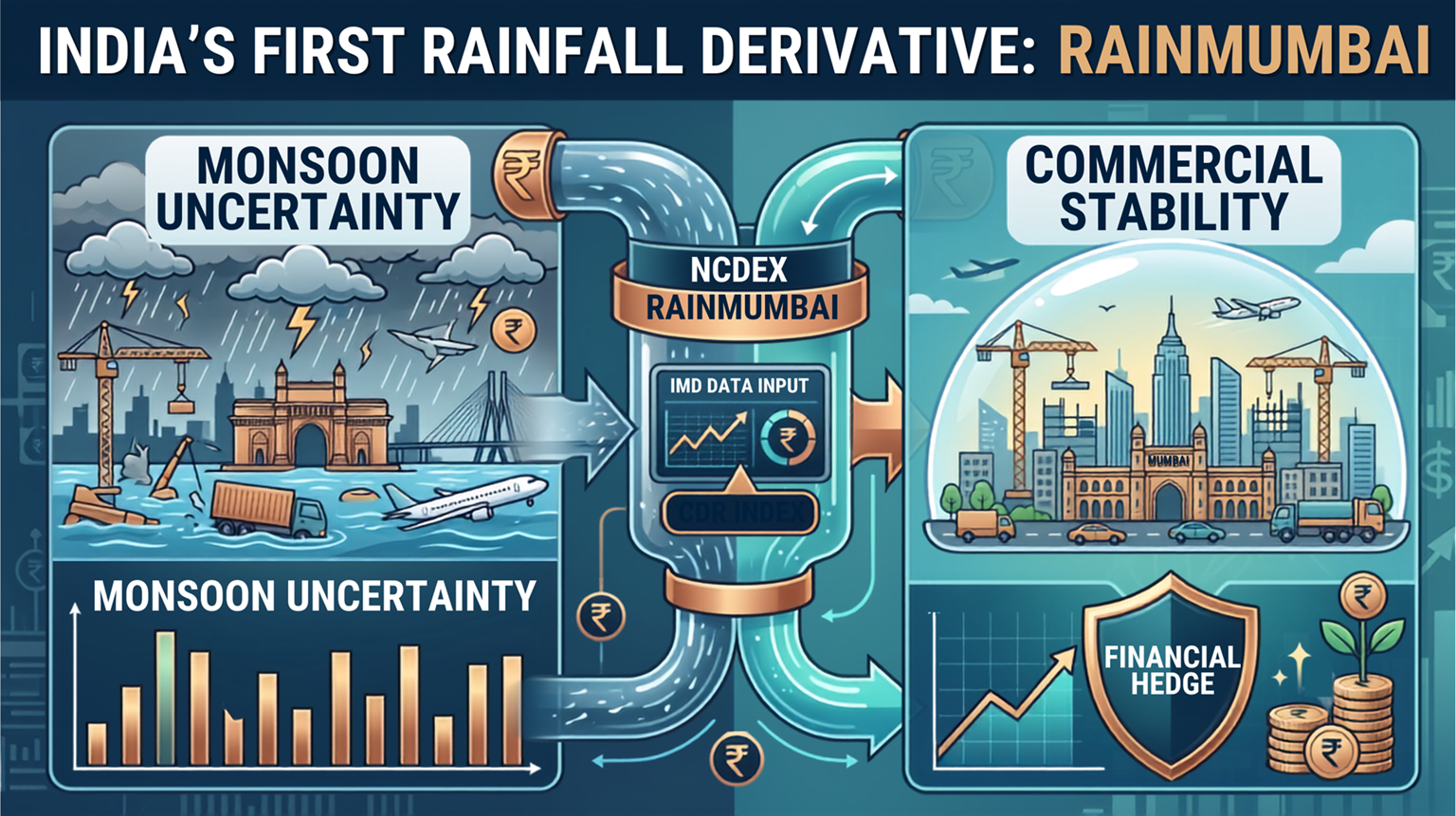
It may sound strange, but this is now an active financial market question in India. On May 29, 2026, the National Commodity and Derivatives Exchange (NCDEX) officially launched RAINMUMBAI, India's first exchange-traded rainfall weather derivative. Developed in collaboration with IIT Bombay, this regulated futures contract allows market participants to take positions based on Mumbai's monsoon rainfall. More importantly, it provides businesses with a regulated financial instrument to hedge against weather-related revenue disruptions.
For retail investors and wealth managers, RAINMUMBAI is a fascinating example of how Indian financial markets are expanding into non-traditional asset classes.
Quick Facts: NCDEX RAINMUMBAI Overview
Exchange & Ticker: Listed on NCDEX under symbol
RAINMUMBAI.
Underlying Index: Cumulative Deviation Rainfall (CDR) Index, measuring deviations from the 30-year Long Period Average (LPA: 1991 to 2020).
Official Reference Source: India Meteorological Department (IMD) daily surface observatories at Santacruz and Colaba, Mumbai.
Contract Specification: 1 mm tick size with a multiplier of 鈧�50 per mm. Maximum order size is 50 lots.
Settlement Mode: 100% Cash-settled. No physical asset delivery or loss proof required.
Primary Objective: Weather risk management and financial hedging for monsoon-exposed commercial sectors.
What Exactly Is RAINMUMBAI?
RAINMUMBAI is a standardized futures contract based on cumulative Mumbai monsoon rainfall.
In a traditional commodity futures contract, the underlying asset is gold, crude oil, wheat, or a stock index. In this weather derivative, the underlying factor is rainfall measured in millimeters (mm).
According to historical IMD data, Mumbai receives an average of 220 cm of rainfall during the southwest monsoon season (June to September). NCDEX established this standardized derivative to help commercial enterprises offset financial losses caused by extreme weather variations.
Crucially, you are not buying or selling physical water. You are trading a cash-settled financial futures contract whose payout depends entirely on meteorological observations.
Why Would Anyone Want to Trade Rainfall?
Because extreme weather carries direct economic consequences. Consider how a typical Mumbai monsoon affects commercial operations:
-
Transport & Logistics: Heavy waterlogging causes flight delays, road closures, and supply chain bottlenecks.
-
Infrastructure & Construction: Persistent rain halts outdoor construction, increasing idle labor costs and project delays.
-
Retail & Hospitality: Severe downpours drop footfall across shopping malls, restaurants, and entertainment venues.
-
Power Utilities & Insurance: Variable rainfall shifts hydro-power production and triggers fluctuating weather claims.
Conversely, significantly below-average rainfall creates severe stress for agriculture, water utilities, and rural consumption. RAINMUMBAI transforms unpredictable weather uncertainty into a measurable, hedgeable financial instrument across sectors like construction, logistics, power, retail, and agriculture.
Paise ki Paathshala Insight:
Want to understand complex market concepts without the financial jargon? Join our Paise ki Paathshala community updates to receive simplified market breakdowns, smart asset allocation tips, and daily financial insights directly on WhatsApp!
How Does RAINMUMBAI Work?
Let's make it simple.
Suppose you believe Mumbai will receive significantly more rainfall than the market expects. A position can be taken in the rainfall futures contract.
If rainfall conditions move in the direction that benefits your position, the value of the contract can increase. If rainfall moves against your position, you can incur a loss.
The contract is cash settled, meaning there is no physical delivery of anything.
The contract specification currently states:
| Feature | RAINMUMBAI Contract Details |
|---|---|
| Exchange | NCDEX (National Commodity & Derivatives Exchange) |
| Underlying Index | Cumulative Deviation Rainfall (CDR) based on IMD data |
| Contract Type | Futures Contract (Cash Settled) |
| Measurement Unit | Millimeters (mm) |
| Lot Multiplier | 1 mm = 鈧�50 |
| Maximum Order Size | 50 Lots |
| Trading Hours | Monday to Friday, 10:00 AM to 11:30 PM / 11:55 PM |
| Daily Price Limit (DPL) | Initial 6% slab, 3% enhanced slab (Aggregate 9% limit) |
Where Does the Rainfall Data Come From?
A regulated weather derivative cannot rely on subjective opinions about whether a monsoon was "heavy" or "light."
RAINMUMBAI relies on transparent, audited meteorological data supplied directly by the India Meteorological Department (IMD). Rainfall measurements are recorded over a standard 24-hour cycle (8:30 AM to 8:30 AM) across official IMD surface stations and Automatic Weather Stations at two key locations: Santacruz and Colaba.
This data is benchmarked against 30 years of historical Mumbai rainfall data (1991 to 2020) to calculate the Long Period Average (LPA), ensuring a completely scientific and non-discretionary settlement process.
Why Is RAINMUMBAI Important for the Indian Economy?
India's economic performance remains deeply connected to the southwest monsoon. Monsoon patterns directly influence agricultural output, rural demand, food inflation, hydro-power generation, and municipal infrastructure.
By introducing RAINMUMBAI, NCDEX has created India's first regulated platform for weather risk transfer. It allows institutional participants to insulate their balance sheets from climate volatility, bringing financial maturity to monsoon-sensitive sectors.
Who Can Use RAINMUMBAI?
The instrument serves two distinct categories of market participants:
-
Commercial Hedges: Construction firms, logistics companies, retail chains, agricultural supply businesses, and outdoor event organizers whose operational revenues decrease during extreme rain.
-
Institutional & Professional Traders: Market participants who analyze meteorological models and historical weather trends to provide liquidity in exchange for price discovery.
Is RAINMUMBAI an Investment or a Hedge?
It is critical to distinguish between hedging and speculation:
-
For a Business (Hedging): A logistics company buying rainfall derivatives to cover lost revenue during severe downpours is using the contract as financial insurance.
-
For an Individual (Speculation): A retail trader taking a position based on weather predictions without underlying business exposure is taking a high-risk speculative position.
The contract itself is a tool. How it functions depends entirely on the market participant's underlying risk profile.
| Parameter | Traditional Stocks | RAINMUMBAI Derivative |
|---|---|---|
| Ownership | Represents partial equity ownership in a company | Futures contract linked to rainfall measurements |
| Value Driver | Business earnings, cash flows, corporate governance | Cumulative rainfall readings relative to IMD benchmark |
| Holding Horizon | Can be held indefinitely for long-term wealth | Has a strict monthly expiry cycle (June to September) |
| Cash Flow | Pays dividends and capital appreciation | Cash-settled payouts based on final index values |
| Risk Profile | Linked to business fundamentals | Linked to climate patterns and derivative leverage |
Can You Lose Money Trading RAINMUMBAI?
Yes. Do not mistake novelty for safety. RAINMUMBAI is a leveraged derivative instrument, meaning small movements in rainfall metrics can result in rapid financial gains or losses.
Key risks include:
-
Leverage Risk: Because futures require margin, adverse weather movements can trigger quick capital losses.
-
Model Risk: Even if your general weather forecast is correct, daily station readings at Santacruz or Colaba may differ from overall city trends.
-
Liquidity Risk: As a newly launched asset class, order book depth and bid-ask spreads require ongoing monitoring.
Frequently Asked Questions
How is the payout calculated for RAINMUMBAI?
Payouts are calculated by multiplying the final Cumulative Deviation Rainfall (CDR) index value by the number of lots held and the 鈧�50 per mm multiplier. For example, if the final index value is +50 mm and you hold 10 lots, the cash payout is 50 × 10 × 鈧�50 = 鈧�25,000.
Is physical proof of damage required for a settlement payout?
No. Unlike traditional crop insurance, RAINMUMBAI is 100% cash-settled purely on audited IMD meteorological data. You do not need to prove physical operational damage to receive settlement.
Investor Takeaway
RAINMUMBAI marks a significant milestone in the evolution of Indian financial markets, turning unpredictable weather risk into a manageable financial asset.
However, retail investors should never trade a derivative simply because it is novel or interesting. While institutional businesses can use weather futures to hedge operational downside, long-term wealth creation for individuals is best built through disciplined equity compounding, goal-based asset allocation, and systematic investing.
Connect With Our Wealth Experts
Ready to transition from reactive saving to strategic wealth creation? Let our certified team assist you with expert Portfolio Management Services (PMS), high-alpha AIF advisory, and comprehensive retirement planning.
-
Book a Consultation: Book a meeting with us for ultimate wealth creation
-
Call Us: +91 8390040100
-
Chat With Us: +91 8390040200
-
Visit Us: 506, Business Galaxy Building, Opp. Gokul Hotel, Beside Box Cricket, Kute Marg, Tidke Colony, Nashik, Maharashtra 422002
Follow for daily updates: WhatsApp | LinkedIn | YouTube | Instagram | Facebook | X | Pinterest
Disclaimer: This article is for educational and informational purposes only and does not constitute financial or investment advice. Investors should consult with their certified financial planner or wealth manager before making any investment decisions. Mutual fund and gold investments are subject to market risks.
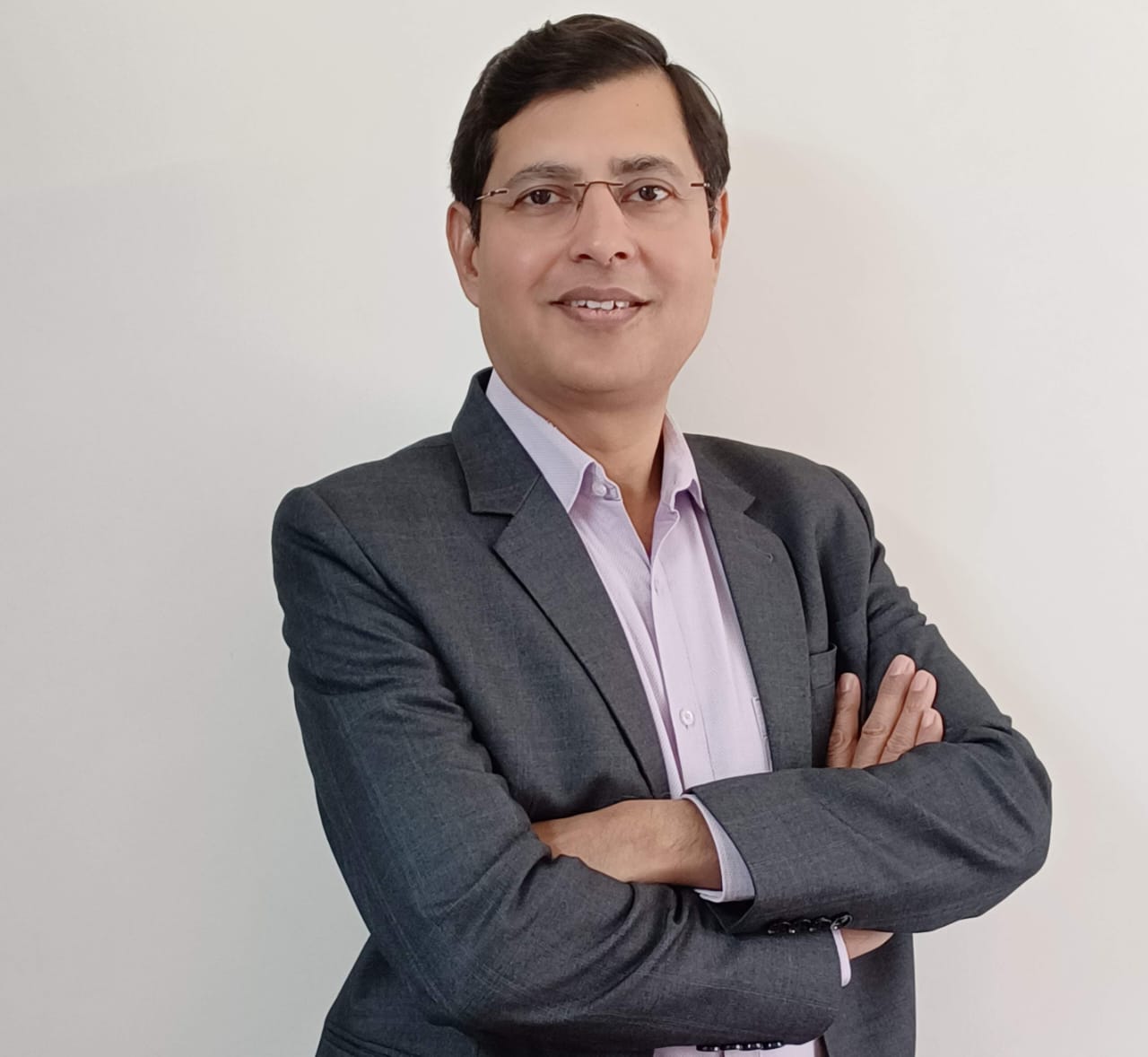
Mr. Unmesh Deshmukh
Founder & Director, Bonvista Financial Services | AMFI ARN: 136656
With over 24 years of elite experience in the financial services industry, Unmesh is a seasoned investment expert. He acts with a strict fiduciary mindset, leveraging data-backed strategies to help individuals and families create sustainable, generational wealth.
Connect on LinkedIn




Disclaimer: Mutual Fund investments are subject to market risks, read all scheme related documents carefully.
Bonvista Financial Services Pvt. Ltd. is an AMFI-Registered Mutual Fund Distributor (ARN: 136656). Any investment guidance provided is strictly incidental to our primary mutual fund distribution activity.