
Bonvista Financial Services Pvt. Ltd. is an AMFI registered Mutual Fund Distributor holding ARN No.136656
Bonvista Financial Services Pvt. Ltd.
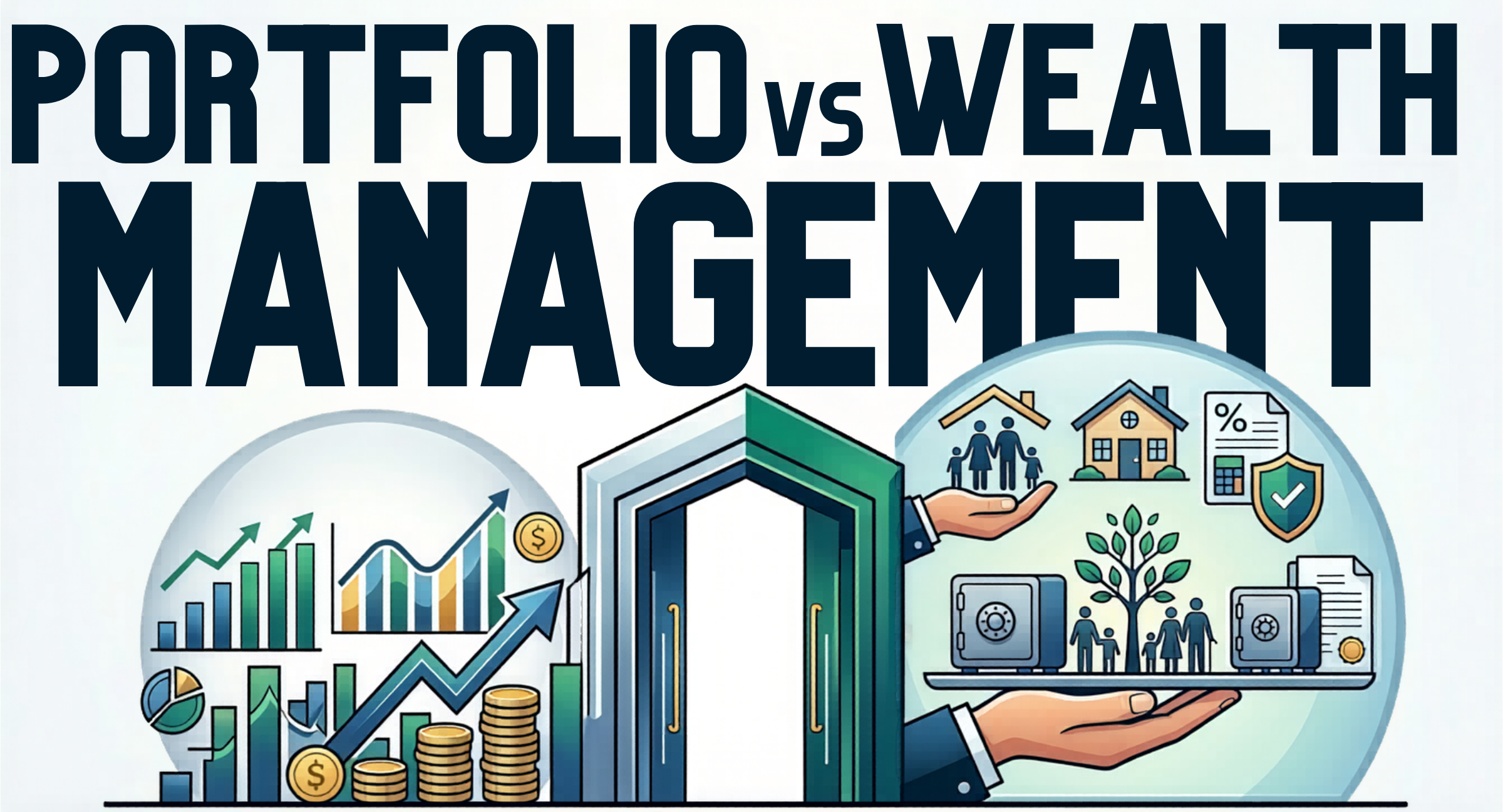
If you're searching for the best financial solution to protect your assets and expand them for the future, the discussion between portfolio management and wealth management is crucial. Here, it's important to keep in mind that both services are different but connected. Although they both seek to increase and safeguard your wealth, they differ greatly in terms of their general breadth, depth, and goals. This guide will assist you in selecting the best service for your needs and financial goals.
What is Portfolio Management?
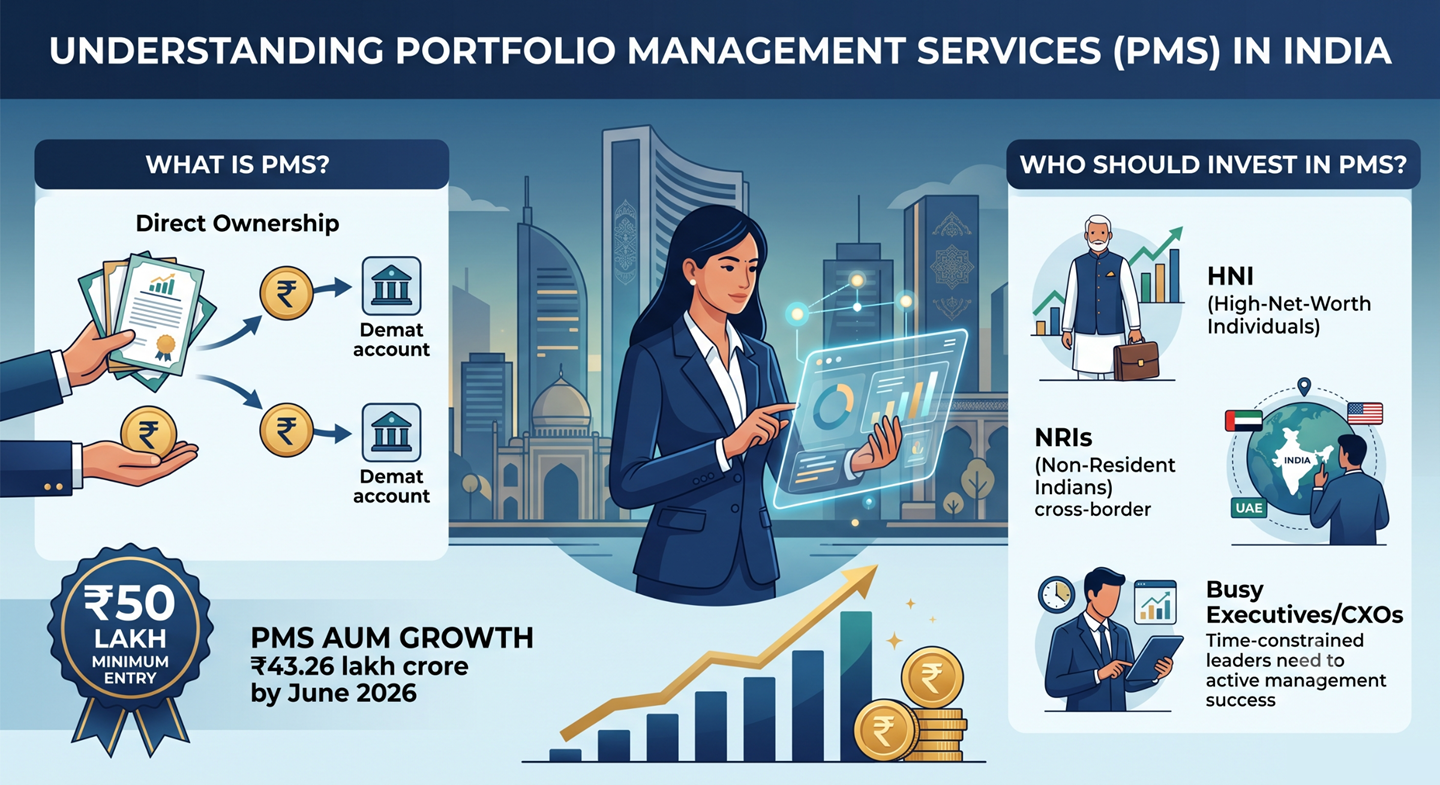
The process of selecting, overseeing, and managing a wide range of investments, from stocks and bonds to other assets, is known as Portfolio Management Services (PMS). Here, the objective is to maximize profits while controlling risks in accordance with your specific financial objectives. This includes diversification, asset allocation, and regular rebalancing to align with your risk tolerance and investment horizon.
In this case, portfolio management could be either passive (replicating index performance) or active (managers strive to outperform the index). Other varieties include advisory (the management just gives recommendations, but the client decides how to carry them out), non-discretionary (the manager offers advice and executes trades only after the client's approval), and discretionary (the manager makes choices on the client's behalf).
What is Wealth Management?
For HNIs (high-net-worth individuals), wealth management services are highly customized financial advising services that combine tax optimization, estate planning, investment management, and comprehensive financial planning. Building, maintaining, and protecting wealth is the ultimate goal in this situation. But it goes far beyond simple investing to provide a more holistic and long-term plan for handling all facets of your finances.
Goal-based investing (retirement planning, cash flow, reducing financial stress), investment advisory (customized strategies for allocating assets to meet specific objectives), and legal and tax strategy (optimizing tax liabilities and organizing estate plans like trusts and wills) are some of the key elements of wealth management. In order to protect investments from market volatility, it also involves professional risk management.
| Aspects | Portfolio Management | Wealth Management |
| Scope | Limited to managing investment assets, such as stocks, Mutual Funds, and bonds. | Wide-ranging, including tax, financial, retirement, and estate planning, apart from investment management. |
| Focus | Enhancing the performance of a particular portfolio to maximize returns for a specific level of risk. | More holistic, focusing on protecting, transferring, and growing overall wealth across multiple generations. |
| Personalization | Moderate to High (depends on the investment objectives and risk profile). | Extremely High (Personalized with focus on family, individual, and inheritance objectives). |
| Client Involvement | Moderate (often transactional, based on portfolio performance and market updates). | High (long-term and deep relationships with active and ongoing coordination). |
| Time Period | Short-term to medium-term (depending on market cycles). | Long-term to intergenerational. |
| Cost Structure | Usually lower (fees are mostly a percentage of the AUM or are based on performance). | Higher (covers more extensive services, including tax and estate planning). |
| Target Segment | Institutions and investors who wish to manage portfolios and often need a particular minimum amount. | HNIs (high-net-worth individuals), ultra-HNIs, and families. |
Scope of Services: Investment vs Holistic Planning
Another important aspect of PMS vs wealth management revolves around the scope of services. The differences in scope include the following:
Portfolio Management Services (Investments Focused):
-
Main objectives are to maximize returns and minimize risk, while growing the investment corpus.
-
Focus area is Bonds, Stocks, Mutual Funds, and other alternative investments.
-
Manages investment portfolios specifically, mostly with a portfolio-first approach.
-
Suitable for Investors who are mainly looking to grow the wealth that has been invested.
Wealth Management Services (More Holistic Planning):
-
The main objectives are safeguarding, growing, and transferring wealth, thereby syncing life goals and finances.
-
Focus area is Extensive planning, tax mitigation, investing, retirement planning, estate planning, philanthropy, and insurance.
-
Plan-first outlook that accounts for the entire financial life journey, inclusive of expenditure, liabilities, and income.
-
Suitable for HNIs who need complex and integrated financial services.
Role of the Manager
Portfolio Manager: A Portfolio Manager focuses on returns and risk, manages specific investments, and the relationship with the client is performance-based. They customize asset allocation and make tactical adjustments based on the market situation.
Wealth Manager: On the other hand, a Wealth Manager focuses on long-term wealth preservation, handles taxes, estate planning, and builds a long-term advisory relationship. They focus on goal-based planning, create different portfolios for different goals, and adjust for life changes for the client.
Cost Structure & Fees
Portfolio Management (PMS)
-
Management fees of 1 to 2.5% p.a. (AUM-based).
-
Performance fees of 10 to 20% of profits, charged only above the hurdle rate.
-
Exit/Entry loads may be 1 to 3% for one-time entry or early withdrawals.
-
Added Costs such as custodian fees, brokerage, and administrative charges.
Wealth Management
-
Management fees of around 1% of the total assets that are AUM-based, but the service range is wider.
-
Flat/Fee-only charges may be taken by advisors by the hour or annually, varying between Rs. 15,000 to Rs. 50,000 p.a.
-
Comprehensive pricing models are often followed, bundling tax planning, investment management, estate planning, and insurance.
Risk & Tax Handling
Portfolio Management focuses on market risk and investment returns with limited tax optimization. Wealth Management covers overall financial risks, advanced tax planning, and estate structuring.
Can Both Work Together?
Wealth management and portfolio management can work together as integrated solutions. The comprehensive long-term strategy, objectives, tax planning, and estate planning will all be determined by wealth management. In this scenario, portfolio management will serve as the execution-focused engine for focused investment strategies to accomplish particular objectives.
To align investment choices with the client's risk tolerance and financial plan, a portfolio manager can collaborate with a wealth manager. This ensuring that gains are preserved after taxes while aiming to increase returns.
Conclusion
Whether wealth management is better than portfolio management depends on your life stage, financial circumstances, and goals.
Choose Portfolio Management if:
-
You only need help with investments.
-
You already handle tax and planning separately.
-
You want higher returns through active strategies.
Choose Wealth Management if:
-
You want complete financial planning.
-
You have large or complex assets.
-
You need tax, retirement, and estate planning.
To start your wealth-building journey, contact us on +91 8390040100 or visit our Website to Book an Appointment!
Follow for daily updates: WhatsApp | LinkedIn | YouTube | Instagram | Facebook | X | Pinterest

Mr. Unmesh Deshmukh
Founder & Director, Bonvista Financial Services | AMFI ARN: 136656
With over 24 years of elite experience in the financial services industry, Unmesh is a seasoned investment expert. He acts with a strict fiduciary mindset, leveraging data-backed strategies to help individuals and families create sustainable, generational wealth.
Connect on LinkedIn