
Bonvista Financial Services Pvt. Ltd. is an AMFI registered Mutual Fund Distributor holding ARN No.136656
Bonvista Financial Services Pvt. Ltd.
Let’s first understand what a “Tariff” is. In simple terms, it is a tax that a government imposes on imported (or sometimes exported) goods. Due to this tax, foreign goods are more expensive when they enter that country.
Let’s see an example. Assume that India exports a shirt to the USA for $100. If the USA Government imposes a 10% tariff on India for Imported Shirts, then the cost of the USA importer would become $110, and thus Indian goods (shirts) would become expensive in the USA. This tariff amount is the income of the USA Government (Customs authority).
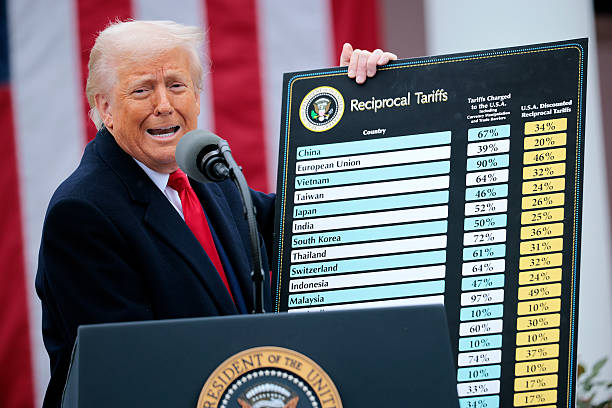
On August 27, 2025, President Donald Trump issued an order raising the US tariff on India to 50%, which affected more than half of India's exports to the US. There are worries about potential diplomatic and economic fallout from these new Indian taxes on US-bound imports, which target industries including leather, jewelry, textiles, and stones.
What tariffs does the US impose on India?
The 50% taxes levied by the US government on a variety of Indian products in 2025 are referred to as India tariffs on US exports. These duties, which were declared on August 6, 2025, and put into effect on August 27, 2025, were supported by US trade laws' Sections 232 (National Security) and 301 (Unfair Trade Practices).
This is a strategic and economic move, as they follow India's growing BRICS role and ongoing imports of Russian oil.
Additional Tariffs by Trump on Indian Imports:
- US President Donald Trump declared on August 6, 2025, that extra taxes would be applied to Indian goods imported into the US starting on August 27, 2025.
- This comes after a previous 25% tax that was put in place on August 1, 2025, in response to geopolitical tension over the conflict between Russia and Ukraine and India's ongoing purchases of Russian oil.
- The duties were the highest that the United States has imposed on any foreign trading partner. India is quite concerned about these high tariffs since they jeopardize their USD 87 billion worth of exports to the US and are straining ties between the two nations.
Overview of US-India Trade Relations
The United States and India maintain a strong and expanding trade partnership, with commerce between the two nations reaching record levels in recent years. Below are the key details of their trade relationship as of 2024–25:
- Bilateral goods trade between the two countries stood at around USD 129.2 billion in 2024.
- The US recorded a trade deficit of approximately USD 45.7 billion with India.
- India’s major exports to the US include pharmaceuticals, precious stones and jewellery, electrical machinery, and mechanical appliances.
- The US remains India’s largest goods trading partner, accounting for nearly 11% of India’s total trade.
- Both nations continue trade talks to reduce tariffs and enhance market access for key products such as spirits, motorcycles, and industrial machinery.
US Tariff Implementation Dates on Indian Goods (2025)
|
Date |
Event |
Tariff Announcement |
|
April 2, 2025 |
Announcement of reciprocal tariffs |
The US announced a 26% tariff on Indian goods, later adjusted to 25%. |
|
April 5, 2025 |
Baseline tariff effective |
A 10% baseline tariff on all imports, including India, was implemented. |
|
April 9, 2025 |
Delay of nation-specific tariffs |
The 16% nation-specific tariff for India was delayed for 90 days until July 9. |
|
July 8, 2025 |
Extension of delay |
The delay period for nation-specific tariffs has been extended to August 1. |
|
July 30, 2025 |
Announcement of 25% tariff plus penalty |
The US declared a 25% tariff on Indian goods, effective August 7, with an unspecified penalty for Russian oil purchases. |
|
August 1, 2025 |
Initial 25% tariff is effective (corrected from earlier reports) |
25% tariff (10% baseline + 15% reciprocal) applied to Indian goods. |
|
August 7, 2025 |
Executive order for 25% tariff implementation |
The White House issued an executive order confirming a 25% tariff on Indian goods, effective immediately, with exemptions for pharmaceuticals, electronics, and energy. |
|
August 27, 2025 |
An additional 25% tariff is effective |
An additional 25% tariff was implemented, bringing the total to 50% for most Indian goods (except exempted sectors). |
|
October 5, 2025 |
Grace period for in-transit goods |
Goods loaded onto ships before August 7 and arriving before October 5 are subject to the earlier 25% tariff rate, not the 50% rate. |
Source: Clear Tax
The 50% Tariff Structure on Indian Goods
Combining a 10% baseline charge, a 25% reciprocal tariff (announced on April 2, 2025), and an extra 25% tariff beginning August 27, 2025, the US tariff on the majority of Indian exports now stands at 50%. India and Brazil have the highest tariff rates among the main US trading partners, in contrast to China (30%) and Vietnam and the Philippines (20%).
However, there are exempted Sectors as mentioned above,
- Pharmaceuticals
- Semiconductors
- Energy resources (crude oil, natural gas)
- Critical minerals
India's strategic exports are safeguarded by this exemption, particularly its generic pharmaceuticals sector, which provides almost half of the US pharmaceutical market.
Due to the impact of tariffs few sectors are most affected, which are listed below,
- Textiles and apparel
- Gems and jewellery
- Leather and footwear
- Marine products
- Chemicals
- Automobile components
Collectively, these sectors make up over 55% of India’s exports to the US, placing them at high risk from the tariff hike.
What Would be the Economic Impact of Tariffs on India?
The tariffs threaten India’s USD 434 billion export engine, with USD 87 billion directed to the US, equivalent to 2.5% of India’s GDP.
- According to industry projections, engineering exports alone might decline by USD 4–5 billion.
- Forecasts have been reduced from 6.5% to as low as 6%, suggesting a 0.2–0.5% drop in overall GDP growth.
- The textile and leather industries, which are dominated by MSMEs, are less competitive as compared to rivals in Bangladesh and Vietnam, where tariffs are lower.
- Concerns about imported inflation and higher borrowing costs for overseas debt-ridden businesses have been raised by the Indian rupee's decline in offshore markets.
Stock Market Reaction to Tariff Announcement.
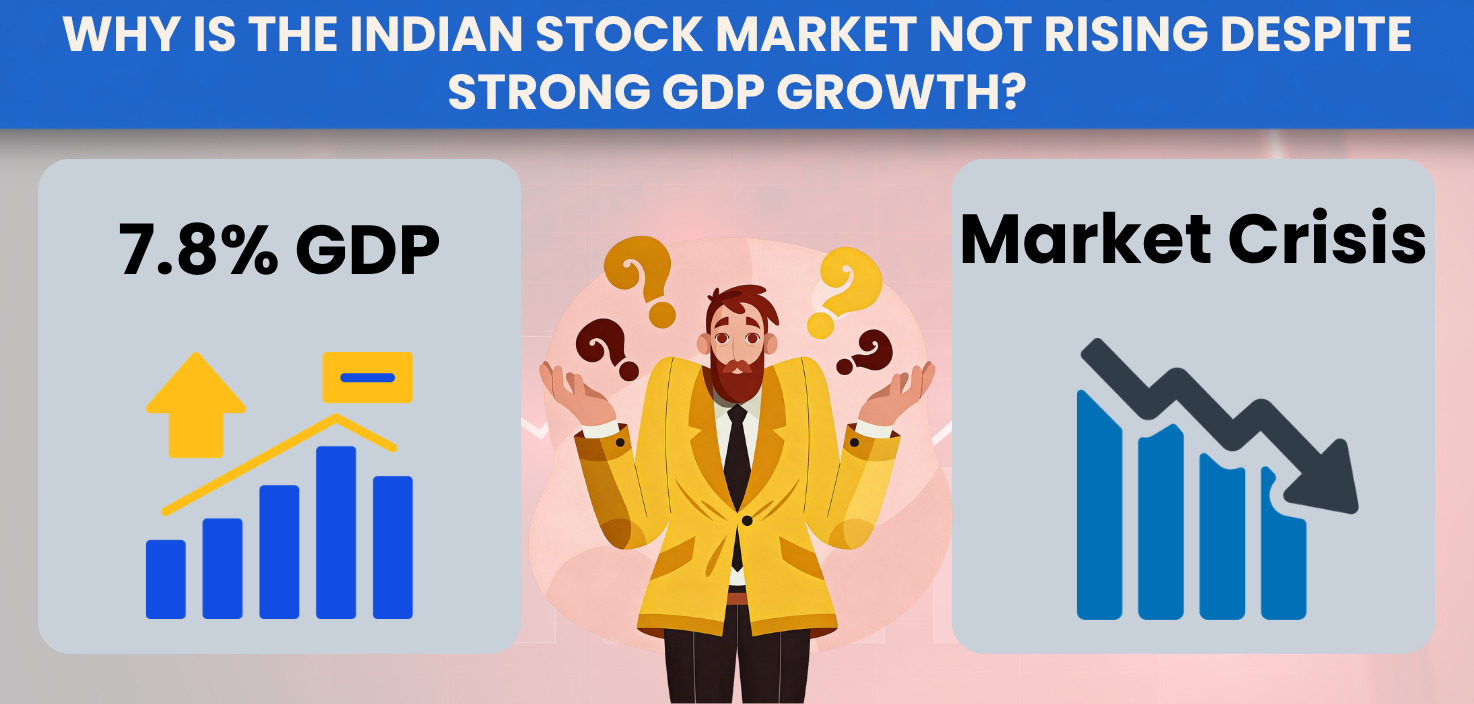
Following the US tax on India, the Indian stock market is still unstable as of October 2025. While defensives like IT and pharmaceuticals are still strong, the tariff shock has caused a widespread market downturn, particularly in export-oriented industries.
What is India’s Strategic Response to the US Tariff?
India has reserved the ability to take action through WTO channels, although it has not yet declared any retaliatory tariffs on US imports.
In order to prevent or lessen the effects of U.S. reciprocal tariffs, India is negotiating a trade agreement with the United States.
According to Reuters, India is considering cutting tariffs on a large portion of US imports as part of the negotiation.
In order to lessen its dependence on the United States for industries that are susceptible to these tariffs, India is attempting to diversify its export markets.
In order to assist impacted industries, particularly labour-intensive ones, it is simultaneously employing "export promotion and trade diversification measures."
Few sectors are under Review for reciprocal tariffs:
- Agriculture (soybeans, almonds, apples)
- Automobiles and motorcycle imports
- Spirits (bourbon whiskey)
- Medical equipment
India’s strategy aims to avoid an immediate escalation while safeguarding domestic industries and preserving diplomatic flexibility.
Final Word:
The US tariff on India is still 50% as of October 2025, which affects important exports including auto parts, textiles, and diamonds. New Delhi concentrates on diplomacy, WTO consultations, and export diversification while maintaining the same levies on US imports. Depending on trade talks, a potential tariff revision is anticipated following the US elections in 2026.
India aims to diversify its export markets. Retail investors should also diversify its investments across asset classes and geographies in order to balance the portfolio and protect downside risk.

Mr. Unmesh Deshmukh
Founder & Director, Bonvista Financial Services | AMFI ARN: 136656
With over 24 years of elite experience in the financial services industry, Unmesh is a seasoned investment expert. He acts with a strict fiduciary mindset, leveraging data-backed strategies to help individuals and families create sustainable, generational wealth.
Connect on LinkedIn